How live option buying on Nifty, BankNifty and SENSEX works in 2026
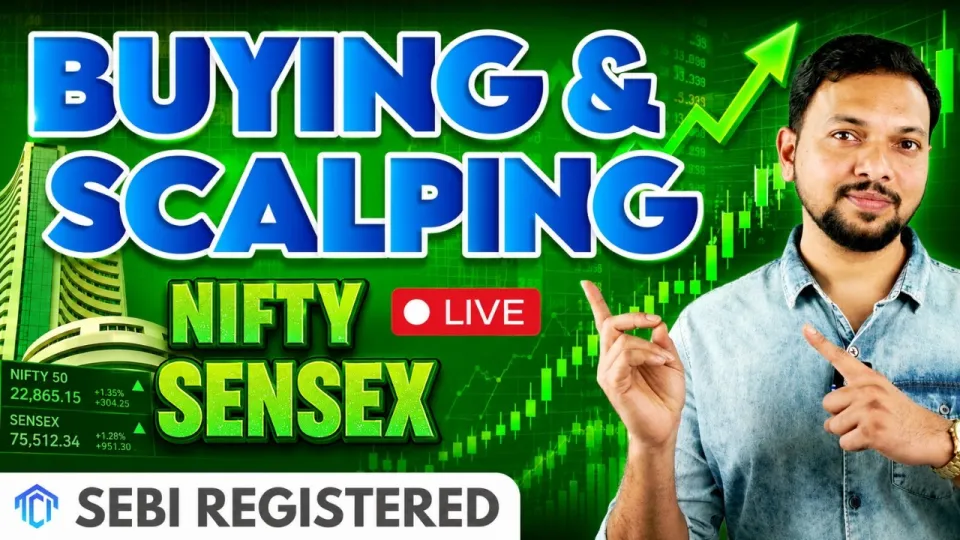
You can order the same kind of articles for your own video to boost it on YouTube and Google. Just message the Telegram bot @sat_sit_bot. The bot writes and publishes the articles itself (with your YouTube video embedded) on popular topical websites (no ads). Try it free: 50 articles on us.
Live option buying on Nifty, BankNifty and SENSEX means picking a strike and expiry, paying a premium, and managing that position within the session while the index moves. The trade is directional and time-limited: the buyer profits only if the index travels far enough, fast enough, to outrun both the premium paid and the decay in its value. A demo or research desk such as Lemonn's SEBI-registered calls is a common starting point for traders who want to watch real setups before committing capital.
What live option buying on Indian indices actually involves
Live option buying is a same-day decision about direction, strike and size on three related but distinct instruments. Nifty tracks 50 large-cap NSE stocks, BankNifty tracks the banking basket, and SENSEX tracks 30 BSE heavyweights; each has its own lot size, tick movement and liquidity. The buyer pays a premium per lot, so the maximum loss is capped at that premium, but the probability of finishing in profit is lower than the capped loss suggests. Most retail losses in this format come from buying too many lots relative to the account and from holding a losing option in the hope that the index comes back.
Nifty, BankNifty and SENSEX compared for intraday buyers
The three indices behave differently enough that the same strategy rarely transfers cleanly between them. BankNifty is the most volatile of the three and produces the biggest point swings, which is why premium on its at-the-money options is expensive and why a single lot can move several thousand rupees in minutes. Nifty is smoother and usually the most liquid, making it the default for beginners. SENSEX options trade on BSE and have their own lot size and depth; spreads can be wider than on NSE, so a fill that looks fine on the chart may cost more in practice.
- Check the lot size and margin requirement for each index before sizing a trade.
- Compare the bid-ask spread on the strike you want — a wide spread eats the edge on a quick scalp.
- Match the index to your holding time: BankNifty suits short bursts, Nifty suits slightly longer intraday holds.
- Watch the expiry calendar; weekly expiries concentrate decay and can make cheap options behave erratically.
How to pick a strike and manage the position
Strike selection decides most of the outcome before the index even moves. At-the-money options carry the most premium and the most sensitivity to index movement, while out-of-the-money strikes are cheaper but need a larger move to pay off. A practical routine for a live session:
- Define the invalidation level on the index chart first — the price at which your view is simply wrong.
- Choose the strike whose premium you can afford to lose entirely without breaching your daily risk limit.
- Set the stop on the option premium, not only on the index, because decay can hit the position even when the index stalls.
- Decide in advance whether you will scale out at a first target or trail the stop.
- Stop trading for the day once the risk limit is hit; revenge trades after a loss are the most common way a small red day becomes a large one.
Risk rules that separate a plan from a gamble
Risk control is the only part of live option buying that a trader fully controls. Because the premium is lost in full if the option expires worthless, the position size should be set so that a total loss on the trade is a small, pre-agreed fraction of the account. Buying several lots because the premium looks cheap is the classic error: cheap options are cheap because the market prices a low probability of a large move. Time decay accelerates as expiry approaches, so an option bought early in the week and held without a move can bleed steadily.
- Cap daily loss at a fixed amount and stop when it is reached.
- Never average down on a losing long option without a fresh, independent reason.
- Avoid adding size in the last hour of expiry-day trading, when premiums swing violently.
- Keep a written record of entry, strike, premium and exit for every trade.
Common questions traders raise during live sessions
Viewers of live trading streams tend to ask the same handful of things, and they are worth answering before the market opens rather than mid-trade. One recurring theme is whether a position can simply be held when it goes against the buyer; the honest answer is that holding a long option without a stop converts a defined loss into an open-ended wait, and decay keeps charging for that wait. Another is whether a specific index level — a round number on SENSEX or Nifty — will be reached; nobody knows, and building a position around a predicted level without a stop is a bet, not a plan. A third is where to find the desk or community behind a stream, which is usually answered by the channel's own links rather than by the chart. And a fourth is what to do after a losing day: the useful response is to reduce size, review the entries against the plan, and not to try to recover the loss in the same session.
Useful links
- Lemonn research calls and registration
- Nifty and SENSEX VIP setups
- Free Telegram channel with trades and BTST news
- XM broker link from the stream
- CoinSwitch Pro signup for crypto and gold calls
Bottom line
Live option buying on Nifty, BankNifty and SENSEX rewards preparation far more than prediction: the strike, the size and the stop are decided before the first candle, and the session is spent executing that plan rather than improvising. The three indices demand different treatment because their volatility, liquidity and expiry behaviour differ, and a strategy tuned on one will not automatically work on another. Losses are part of the format, so the traders who last are the ones who keep each loss small enough to survive. This breakdown was prepared by the TRADING CAFE INDIA channel, which streams live index trading sessions; if you want to follow its research desk, start with the Lemonn registration link.
Key takeaways
- Live option buying means choosing a strike and expiry on Nifty, BankNifty or SENSEX and managing the position inside the session, not holding a view for weeks.
- BankNifty moves in larger point swings than Nifty, so the same lot size carries far more rupee risk per trade.
- SENSEX options trade on BSE with their own lot size and liquidity profile, which differs from NSE index options.
- Premium decay works against buyers: an option can lose value even when the index barely moves.
- Position size and a hard stop decided before entry matter more than the entry signal itself.
Source: LIVE TRADING Nifty BankNifty and SENSEX | Option Buying | 15 Oct #livetrading · Markdown version
Questions & answers
Is live option buying on Nifty and BankNifty suitable for beginners?
It can be studied by beginners, but real-money intraday option buying is unforgiving because premium decay and leverage work against inexperienced traders. Starting with one lot on the most liquid index, or with a demo account, keeps the cost of learning low.
Why do traders lose money even when the index moves in the right direction?
The option premium already prices in part of the expected move, and time decay erodes value as expiry approaches. If the index moves too slowly or not far enough, a correct directional view can still produce a loss on the option.
How is trading SENSEX options different from Nifty options?
SENSEX options trade on BSE with their own lot size and liquidity profile, and spreads can be wider than on the more heavily traded NSE indices. That means execution costs and fill quality need extra attention.
What is the single most important rule for an intraday option buyer?
Decide the maximum loss per trade and per day before entering, and size the position so a total loss of premium stays within that limit. A stop on the option premium, not just on the index chart, keeps decay from turning a small loss into a large one.